Why Macros Matter

You can eat “healthy”, “clean”, follow a certain “diet”, and still not see the progress you’re looking for in your health and fitness goals. And that feels very frustrating and discouraging.
I’ve had clients who, up to the point of us working together, were only tracking how many calories they were consuming in a day. While that is a fine start we need to get more specific on where those calories are coming from. -because it does make a difference.
Today we’re going to go over the basics of macronutrients and why they’re the foundation to whatever your health goals are.
First let’s go over some vocab.
A calorie is a unit of energy commonly used to measure the amount of energy provided by food and beverages and the amount used by the body in physical activity and daily functions. Macronutrients are what make up the calories we consume.
Macronutrients are the nutrients that the body needs in large amounts to provide energy and support essential bodily functions. All foods and drinks we consume are made up of these three macronutrients: Carbohydrates, Protein, and Fats.
Let’s go over these macronutrients and what they do for us which will show us why they matter.
The first macronutrient is all you hear about these days, Protein.

And honestly I’m here for it! Protein is absolutely crucial and most people are nowhere close to consuming the daily amount needed to ensure their health is thriving.
Protein is needed to build and repair tissues including bones, muscles, skin, and internal organs. It makes enzymes and hormones and supports immune health.
Protein is made up of smaller units called amino acids, some of which the body cannot produce on its own and must be obtained from food - these are called essential amino acids (EAAs). There are nine of them. When you consume a food that has all nine of them that is called a complete protein source. If you’re hungry, there’s a good chance you’re in need of some protein.
1 gram of protein equals 4 calories.
Protein sources include: meat, poultry, seafood, eggs, dairy (cottage cheese, yogurt, cheese, milk), tofu, legumes, and nuts. Complete protein sources: meat, poultry, seafood, eggs, dairy, quinoa, and soy.
The second macronutrient (with a bad rep) is Carbohydrates.

Carbs are the body’s primary and preferred source of energy. When we eat carbs, our body breaks them down into glucose (a form of sugar) to fuel our muscles, organs and brain.
Glucose is especially critical for high-intensity exercise and daily activities. Consuming carbs spares protein from being used as an energy source, allowing protein to focus on muscle repair and other essential functions.
Carbohydrate intake stimulates the production of serotonin, a neurotransmitter that supports mood stability and emotional well-being. Low-carb diets can sometimes lead to irritability or difficulty concentrating. Carbs are essential for brain health, clarity, concentration, and a stable mood.
1 gram of carbs equals 4 calories. (Yes, the same as protein.)
Carb sources: Grains, fruits, vegetables, sweeteners, and legumes.
There are two types of carbs: Complex and Simple.
Complex carbs provide long-lasting energy. Complex carbohydrate sources include: grains (wheat, rice, corn, oats, etc.), legumes (beans, peas, lentils, chickpeas), and vegetables.
Simple carbs provide quick energy. Fruits and sweeteners (honey, maple syrup, raw cane sugar, coconut sugar, etc) are sources of simple carbs.
And savoring the best for last - the third macronutrient is Fat.

Fat provides the body with energy, keeps all the systems in our body flowing smoothly (think of it like the oil in your car), are the building blocks for proper hormone function and supports brain health (60% of our brain is fat). Fats are essential components of every cell membrane, giving cells their structure and helping regulate nutrient movement throughout the body.
Dietary fat is required for the absorption of fat-soluble vitamins: A, D, E, and K. If you’re not eating enough fat, deficiencies in these vitamins can develop.
1 gram of fat equals 9 calories. (Yes, over double the calories of carbs and protein.)
Fat Types:
Unsaturated fats (Omegas 3, 6, & 9): Extra virgin olive oil, avocados, nuts, seeds, fatty fish (wild caught salmon)
Saturated fats: Dairy & dairy products from whole milk/cream, beef fat (tallow), pork fat (lard), egg yolks, and coconut oil.
Fats to avoid: Trans fats (margarine) and industrialized seed oils (canola oil, cottonseed oil, soybean oil, vegetable oil, etc.)
So with all that being said, we see that if we’re not eating macronutrients, we are not setting our bodies and brains up for success. We’re not allowing our bodies to operate to the best of their abilities.
Let me share some examples:
If your focus is to lose body fat and therefore in a calorie deficit, we want to make sure you’re eating adequate protein so that your body isn’t cannibalizing your muscles to get its energy needs. We don’t want you to lose any lean body mass (muscle), just the body fat.
I’ll have people come to me eating “healthy” but not dropping the weight they’d like to. They are typically eating wonderful, healthy fats like nuts and seeds but not realizing the gram to calorie ratio that fats have.
On the other hand I see many health coaches still talking about not having your fat intake exceed 20% of your daily calories. And to me, 20% is the bottom of the barrel MINIMUM amount of fat you should be consuming in a day. (I think this is remnants from the low fat craze of the 80’s and 90’s.) I like to aim for more like 30% of calories come from (healthy) fats for my clients. Fats do so many good things for our bodies and brains. And let’s be honest fats are what give the depths of the flavors to a lot of foods. What is toast without butter or a steak without some fat marbling or potatoes without being cooked in tallow…bland, tough, not enjoyable to eat. And food should absolutely be enjoyable to eat! We’re given tastebuds for a reason, y’all!
Now I would love to be able to share with you exact numbers for how many grams of each macronutrient you should aim to consume in a day but the truth is that those numbers are specific to you (height, age, weight, gender), your lifestyle, and your goals. Also each of our bodies are unique and will respond differently to certain types of foods and even particular macronutrient breakdowns.
One tip I will give you is like I said earlier most people are not eating enough daily protein. If you typically eat three meals a day, aim for at least 20-30 grams of protein per meal.
I’d encourage you to start by keeping track of what you eat each day and which macronutrient that food is made up of. [i.e. eggs (protein & fat), yogurt (fat & protein) with fresh berries (carbs), buttered toast (fat and carbs).] This is simply to become more mindful and aware of the foods you're consuming. You may be surprised to learn how much you're eating or not eating of a certain macronutrient.
This could be as simple as writing down what you eat in your daily planner or in your Notes app on your phone. There’s also apps specific to tracking food like MyFitnessPal. Or you could start with just tracking your daily protein intake. You can find the macronutrients of the food you’re eating on the nutrition label attached to the food.
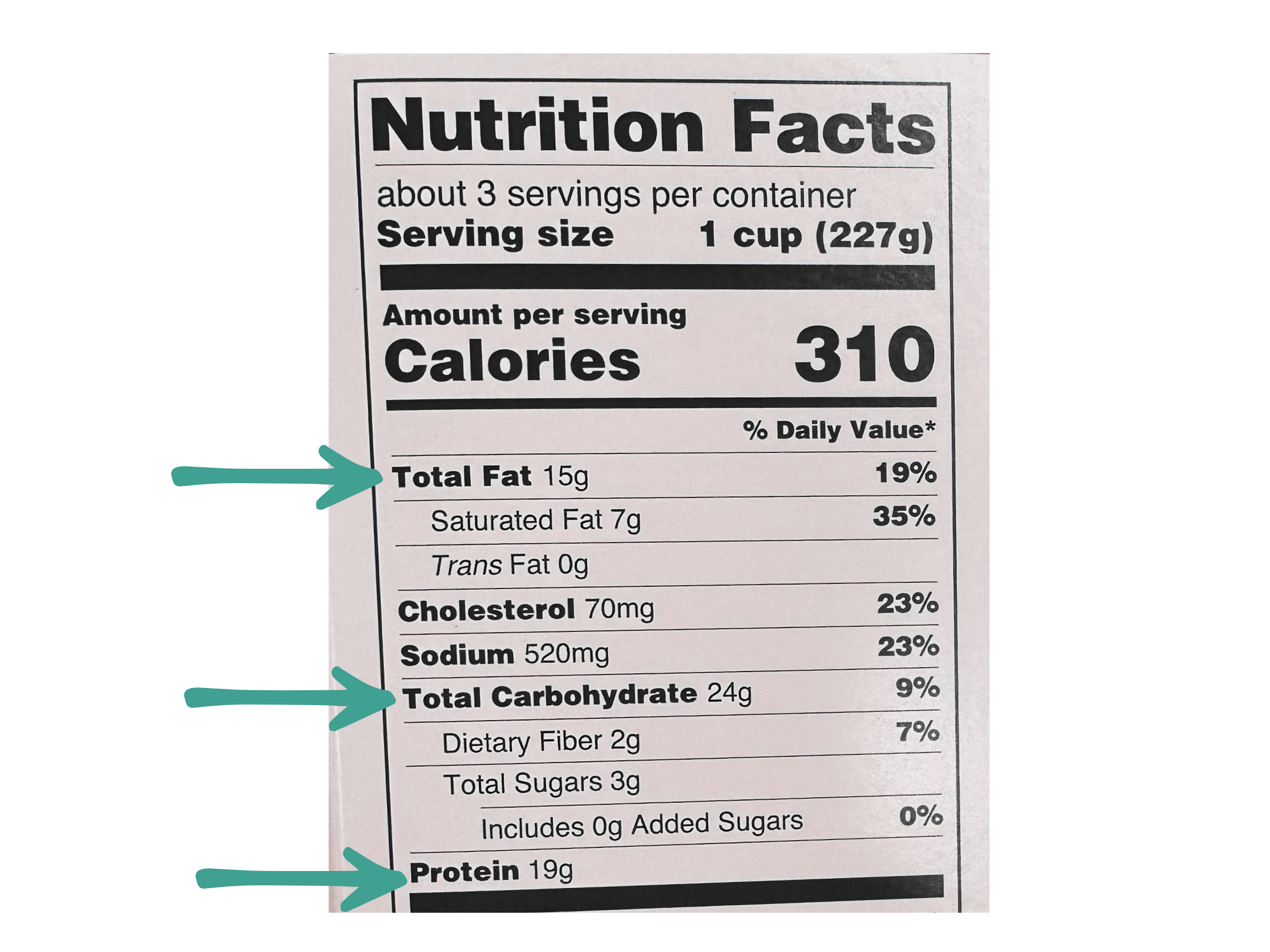
There’s really no wrong way to get started. The main objective is to just start! So start with whatever feels easy for you to start with.
The more we get curious about the foods we eat, what they're made up of, how they're made, and what they do for our bodies, mind, and spirit (make us feel happy or sad), the more we will understand ourselves, our health and curate a healthier relationship with food. Eat well, my friends!
*This article is for educational purposes only.
Recipe
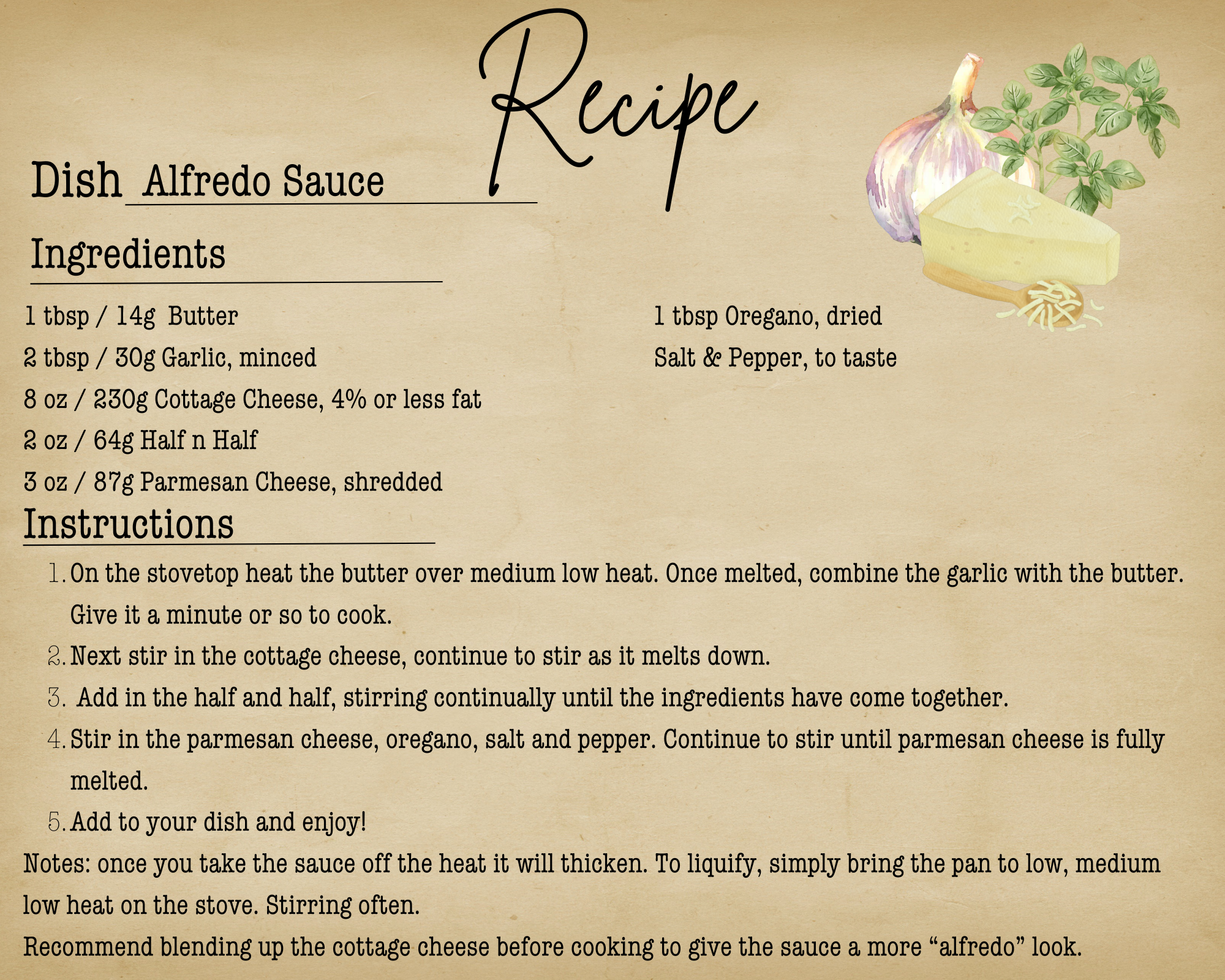
If you or someone you're cooking for doesn't like cottage cheese, I promise you don't taste it at all! Give it a try and let me know how it goes. This is our go-to Alfredo sauce recipe!
Recommendation
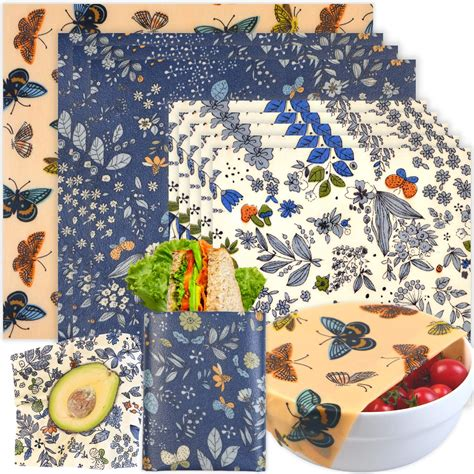
Have you heard of beeswax wraps? They're an eco-friendly alternative to plastic wrap. I love using them knowing I'm lessening my plastic use. I have the one linked below which is just one long roll of beeswax paper so you can cut it to whatever size you'd like; I appreciate that flexibility so I'm not locked into certain sizes. I also love that they're re-useable and when their time does finally come to a close they can be composted or used as a fire starter. A completely closed-loop product!